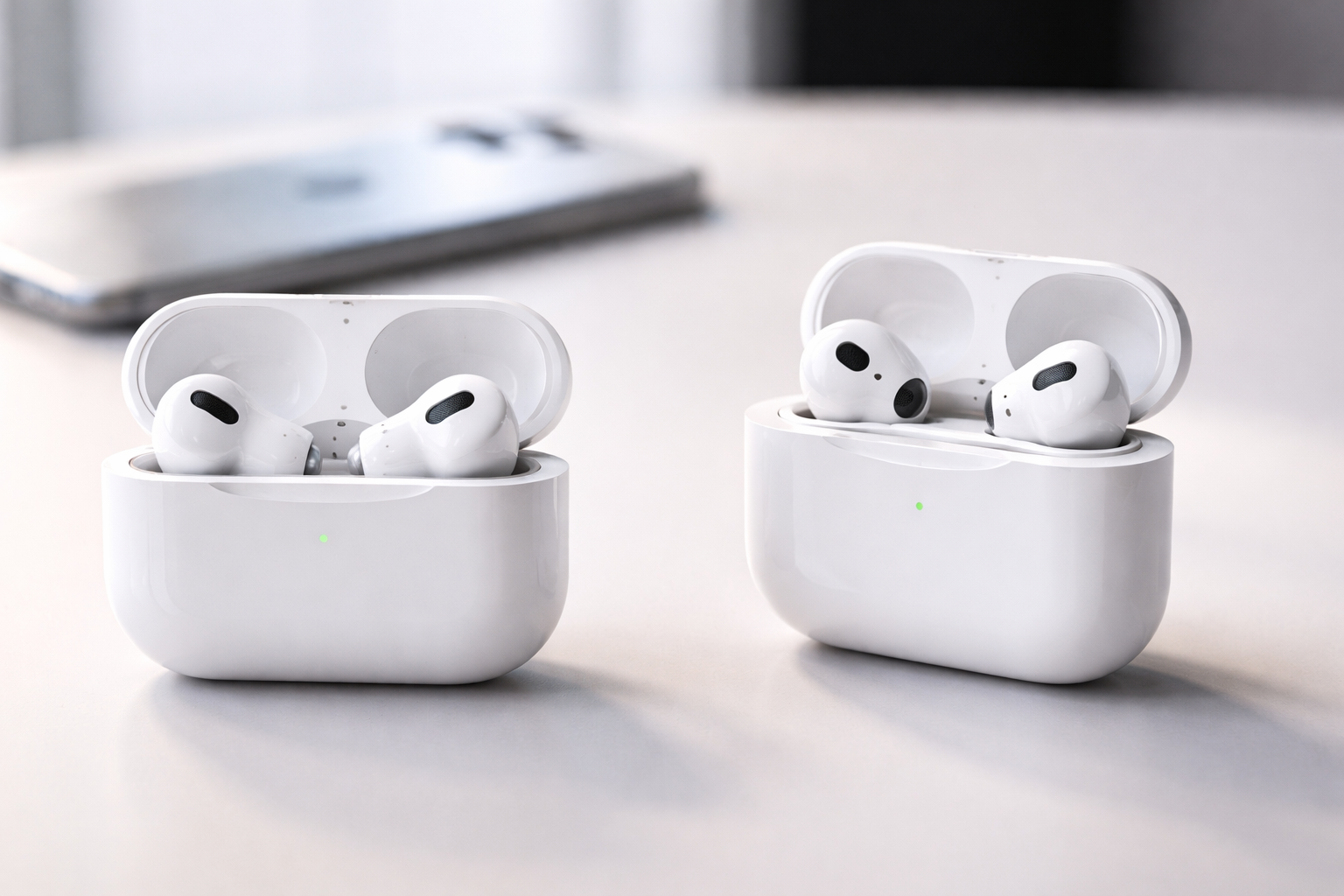
AirPods Pro vs AirPods 3: Which is Better for iPhone Users?
If you’re an iPhone user trying to decide between Apple’s “best value” earbuds and the “no-compromises” pair, you’re not alone. The airpods pro vs airpods 3 debate usually comes down to one frustrating question: Do you actually need noise cancellation and pro-level features… or are you about to overpay?
I’ve helped friends (and family members who swear they “don’t care about audio”) pick between these two more times than I can count. And the pattern is always the same: once you match the earbuds to your real day-to-day life—commuting, calls, gym, open office, walking the dog—the right choice becomes obvious.
This guide breaks it all down for iPhone users: sound, ANC, battery, comfort, call quality, iOS features, and which one is the smarter buy in 2026.
Quick Answer (iPhone Users)
AirPods Pro (latest Pro generation) are better for most iPhone users who commute, work in noisy places, take lots of calls, or want the best Apple features (ANC, Adaptive Audio, hearing health tools). AirPods 3 are the better pick if you want a lighter open-ear feel, don’t need noise cancellation, and you’re trying to stay under a tighter budget.
AirPods Pro vs AirPods 3: The Real Differences That Matter
On paper, both are “Apple earbuds” with seamless iPhone pairing and Spatial Audio. In real life, they feel like different categories:
- AirPods Pro = earbuds that can control your environment (ANC, Adaptive/Transparency modes), plus more advanced sensors and hearing-focused features.
- AirPods 3 = earbuds that keep you more aware of your surroundings (open fit), with solid sound and Apple ecosystem convenience.
If you only read one section, read the table below. It’s the fastest way to decide.
Side-by-Side AirPods Comparison (2026 Buyer View)
| Feature | AirPods Pro (latest) | AirPods 3 |
|---|---|---|
| Active Noise Cancellation (ANC) | Yes (Apple claims up to 2x better than Pro 2, 4x better than Pro 1) | No |
| Transparency / Adaptive Audio | Yes (Transparency + Adaptive Audio + Conversation Awareness) | Basic open fit (no ANC modes) |
| Fit | In-ear with silicone tips (sealed) | Open-ear style (no tips) |
| Spatial Audio (iPhone) | Yes (Personalized Spatial Audio + head tracking) | Yes (Personalized Spatial Audio + head tracking) |
| Call Quality in Noise | Stronger (beamforming mics + Voice Isolation benefits) | Good, but weaker in loud environments |
| Battery (earbuds) | Up to 8 hrs with ANC (varies by mode/features) | Generally solid for non-ANC use (varies by generation/settings) |
| Hearing Health Features | Yes (Hearing Test / Hearing Aid / Hearing Protection on supported iOS) | No |
| Workout/Advanced Sensors | More advanced (e.g., heart-rate related features on supported models) | Basic |
| Typical Price Range | ~$249–$299 (often discounted) | ~$169–$179 (often discounted) |
My take: if you ever wished your earbuds could “turn down the world,” you’re already describing AirPods Pro.
Sound Quality: Which Actually Sounds Better on iPhone?
Both sound “Apple-clean,” and both benefit from iPhone features like Personalized Spatial Audio. But the listening experience changes a lot based on fit.
AirPods Pro (latest): fuller sound because of the seal
The silicone tips create a seal in your ear, which typically delivers:
- Better bass (not just louder—cleaner and more consistent)
- More detail at lower volumes (because you’re not fighting outside noise)
- A more immersive Spatial Audio feel, especially in movies
AirPods 3: open-ear sound that feels “lighter”
AirPods 3 sound good, but because they don’t seal your ear canal, you’ll often notice:
- Less bass presence in noisy places
- More volume needed on commutes
- A more “airy” sound that some people actually prefer for long wear
If you mainly listen at home or in quiet places, AirPods 3 can be totally satisfying. If you listen while moving through the real world, Pro wins more often than not.
Noise Cancellation: This Is the Biggest Dealbreaker
This is where the comparison stops being close.
AirPods Pro: ANC + Adaptive modes are the iPhone “power user” choice
With AirPods Pro, you’re paying for a set of features that changes daily life:
- Active Noise Cancellation for trains, planes, coffee shops, open offices
- Transparency when you need awareness without removing earbuds
- Adaptive Audio that blends ANC and Transparency depending on your environment
- Conversation Awareness that reduces volume when you start talking (in supported modes)
Apple claims the newest Pro generation delivers 2x better ANC than Pro 2 and 4x better than Pro 1. Even if you don’t measure it, you feel it when the subway noise drops and your podcast becomes crystal clear.
AirPods 3: no ANC, but naturally “aware”
AirPods 3 don’t cancel noise. The upside is you remain aware of traffic, announcements, and people around you—without relying on a Transparency mode.
If you commute or work around noise: AirPods Pro are usually the “buy once, be happy” option.
Calls and Mic Quality: Which Sounds Better to Other People?
Most people buy earbuds for music… then realize the real test is whether you sound good on calls.
Choose AirPods Pro if you take calls in noisy places
Between improved microphones, Voice Isolation support on iPhone, and better noise handling overall, AirPods Pro tend to deliver more reliable call quality in:
- busy streets
- gyms
- open offices
- public transit
AirPods 3 are fine—until the environment gets loud
For indoor calls or calm outdoor walks, AirPods 3 do the job. But if you’re often competing with background noise, they can’t “cheat physics” the way Pro can with isolation + processing.
Battery Life: What iPhone Users Should Expect
Battery isn’t just “hours.” It’s also how often you’re annoyed enough to stop using them.
AirPods Pro battery highlights
- Up to 8 hours with ANC (Apple spec for latest Pro generation)
- Around 7.5 hours with Spatial Audio in typical use scenarios
- Some advanced modes/sensors can reduce runtime (e.g., workout tracking features)
AirPods 3 battery highlights
AirPods 3 typically deliver strong everyday battery life because they’re not powering ANC. If you want a simple “pop them in and forget about it” experience, AirPods 3 are easy to live with.
Practical tip: If you listen at low volume because ANC blocks noise, you may actually “feel” better battery behavior day-to-day with Pro—because you’re not cranking volume to overpower your environment.
Comfort & Fit: The One Thing No Spec Sheet Can Decide
This is where people get surprised.
AirPods Pro comfort: great if you like in-ear tips (or can find the right size)
If you’re fine with silicone tips, Pro is secure and stable—especially for workouts. But if you hate the “plugged ear” feeling, you may never fully love them (even with great Transparency).
AirPods 3 comfort: best for people who dislike tips
AirPods 3 are usually the safer pick for:
- people who don’t want anything sealing their ear canal
- all-day office wear
- light listening while staying aware
If possible: try the fit in-store. Fit preference is the #1 reason people return earbuds.
iPhone Features: What You Get in the Apple Ecosystem
This is an apple earbuds review moment where Apple genuinely does better than most brands: the iPhone integration is effortless on both.
- Instant pairing: open the case near your unlocked iPhone, tap Connect
- Bluetooth 5.3 on newer models for faster, more stable connections
- Personalized Spatial Audio with dynamic head tracking (supported devices)
- Siri support (including voice activation on supported iOS versions/devices)
What Pro adds that AirPods 3 don’t
- Hearing health features (Hearing Test / Hearing Aid / Hearing Protection on supported iOS; FDA-authorized for mild-to-moderate loss in eligible regions and ages)
- Advanced listening modes (ANC, Adaptive Audio, etc.)
- More advanced sensors that improve in-ear detection and certain workout/call experiences
- Extra “quality of life” features like camera remote support on some Pro generations/settings
Compatibility note: AirPods Pro work with older iPhones (like iPhone 11/13) for core features, but some newer software-driven features require newer iOS versions and capable iPhone hardware.
Which Should You Buy? (Simple Decision Guide)
Buy AirPods Pro if you’re any of these people
- You commute or travel and want serious noise cancellation
- You work in a shared space and need focus
- You care about call quality (especially in noisy environments)
- You exercise often and want a more secure fit
- You want Apple’s newest airpods features, including hearing-focused tools
Best pick for most iPhone users: AirPods Pro (latest) — especially if you can grab them on sale.
Check latest AirPods Pro pricing/deals here
Buy AirPods 3 if this sounds like you
- You dislike silicone ear tips or the “sealed” in-ear feel
- You mainly listen in quieter places (home, office, campus)
- You want Apple quality without paying Pro pricing
- You prefer an “open” listening style for awareness
Best value pick: AirPods 3 for casual listening and comfort-first buyers.
See current AirPods 3 price drops here
Pros & Cons (Quick Buying Clarity)
AirPods Pro (latest) Pros
- Top-tier ANC (massive difference on commutes)
- Adaptive Audio + Transparency feel “smart” in daily use
- Usually better call performance in real-world noise
- Hearing health features on supported iOS versions
- Great for workouts due to secure fit
AirPods Pro (latest) Cons
- Higher price
- Some people dislike in-ear tips
- Newest features may require newer iOS/iPhone hardware
AirPods 3 Pros
- Often more comfortable for tip-haters
- Usually cheaper (and discounts can be excellent)
- Great Apple ecosystem experience for the money
- Open fit = more natural awareness
AirPods 3 Cons
- No ANC (biggest drawback)
- Less consistent bass in noisy environments
- Call quality can struggle more when it’s loud around you
Value & Pricing: Is Pro Really Worth It?
Pricing changes constantly, but typical ranges look like this:
- AirPods Pro (latest): ~$249–$299
- AirPods 3: ~$169–$179
Here’s the simplest way to think about value:
- If ANC would improve your day even 3–4 times a week, Pro is worth paying for.
- If you rarely deal with noise and mostly want convenience + comfort, AirPods 3 is the smarter spend.
Deal strategy: If you’re leaning Pro, wait for a price dip (they happen often after major Apple announcements and during retail promo weeks). When the gap shrinks, Pro becomes the obvious choice.
FAQs (AirPods Pro vs AirPods 3)
Do AirPods Pro work with older iPhones like iPhone 11 or iPhone 13?
Yes. Core features like pairing, ANC (on Pro), and Spatial Audio work over Bluetooth with supported iOS versions. Some newer software features (especially Apple Intelligence-style capabilities) may require newer iPhones and newer iOS versions.
AirPods Pro vs AirPods 3: which has better noise cancellation?
AirPods Pro, by a mile. AirPods 3 do not have Active Noise Cancellation. The latest AirPods Pro generation includes advanced ANC that Apple claims is significantly improved versus earlier Pro models.
What’s the battery life of AirPods Pro with iPhone?
Apple specs for the latest Pro generation list up to 8 hours with ANC (varies with settings like Spatial Audio and other features). Your real battery will depend on volume, mic use, and modes.
Can AirPods Pro act as hearing aids for iPhone users?
On supported models and supported iOS versions (often iOS 18+ for the newer hearing features), AirPods Pro include hearing health tools such as Hearing Test and Hearing Aid functionality (FDA-authorized for mild-to-moderate hearing loss in eligible regions/ages).
How do AirPods pair with iPhone?
Open the case near your unlocked iPhone, and a setup card pops up. Tap Connect. If that doesn’t appear, you can pair manually via Settings → Bluetooth.
Which is better for workouts: AirPods Pro or AirPods 3?
AirPods Pro are usually better for workouts because the in-ear seal is more secure, and they’re stronger in noisy gyms thanks to ANC/Adaptive modes. Some Pro generations also add advanced workout-related sensors.
Do both support Spatial Audio on iPhone?
Yes, both support Personalized Spatial Audio with dynamic head tracking on compatible iPhone models and iOS versions.
Conclusion: My Recommendation for Most iPhone Users
If you want the quick, honest recommendation: AirPods Pro are the better buy for most iPhone users because ANC + Adaptive Audio + stronger calls improve everyday life in a way AirPods 3 simply can’t.
That said, AirPods 3 are still a great choice if you prioritize comfort, prefer an open fit, and mostly listen in quieter environments.
Ready to choose?